
On Monday, we announced the Mobile Testnet. Since then, dozens of users have submitted feedback from the app. Some of it is great, some is not so good, but all is helpful. We've been busy incorporating this throughout the week, making dozens of small changes to get Hypercall ready to ship next month.
We shipped user-facing changes across market coverage, price consistency, outcome visibility, theming, feedback, and trading reliability. Most of these are not big splashy features in isolation. They are the kind of changes that determine whether a trading product feels coherent when you actually use it.
Tl;DR:
- Mobile Testnet is live with BTC, ETH, HYPE, US500 and USOIL options
- Asset stats now support a Hypercall / Hyperliquid toggle, and we added PUT/CALL ratio
- Underlying prices are now normalized across the app, with better live price inputs
- Price Target now seeds correctly and no longer gets stuck in bad animation states
- Positions and settlement views now have clearer outcome badges, chips, and saved display preferences
- Mobile now supports both Midnight mode and Auto mode that follows device theme
- Feedback now supports image uploads
- iOS install flow is clearer, deposit flow is tighter, and reconnect behavior is more reliable
- Standard margin now blocks option buys that would push cash negative, while still allowing risk-reducing exits
Mobile Testnet, Now With More Surface Area
The headline for the week is simple: Hypercall Mobile Testnet is now live, and users can trade on-chain options on US500 and USOIL.
That matters for two reasons.
First, it expands testnet beyond crypto-native underlyings and gets us closer to the product we actually want to build: options across asset classes, not just another crypto derivatives venue.
Second, it gives us a better environment to test how users think about these markets in practice, not just in theory.
Better Market Context
A lot of this week was spent fixing something that sounds small but is actually fundamental: the app should not disagree with itself about price.
We normalized underlying price display across pages and improved the live price inputs we use underneath, including better DEX perp data. If asset pages, option pages, account surfaces, and Price Target all show slightly different realities, the product feels untrustworthy. We tightened that up.
We also improved the stats layer:
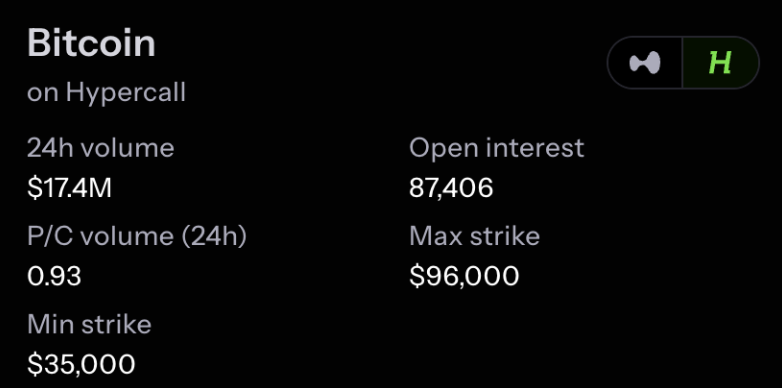
- Asset stats can now toggle between Hypercall-specific and Hyperliquid-specific views where that distinction matters
- We added put/call ratio to Hypercall stats
- Price Target now starts from a sensible initial price instead of making the user do unnecessary setup
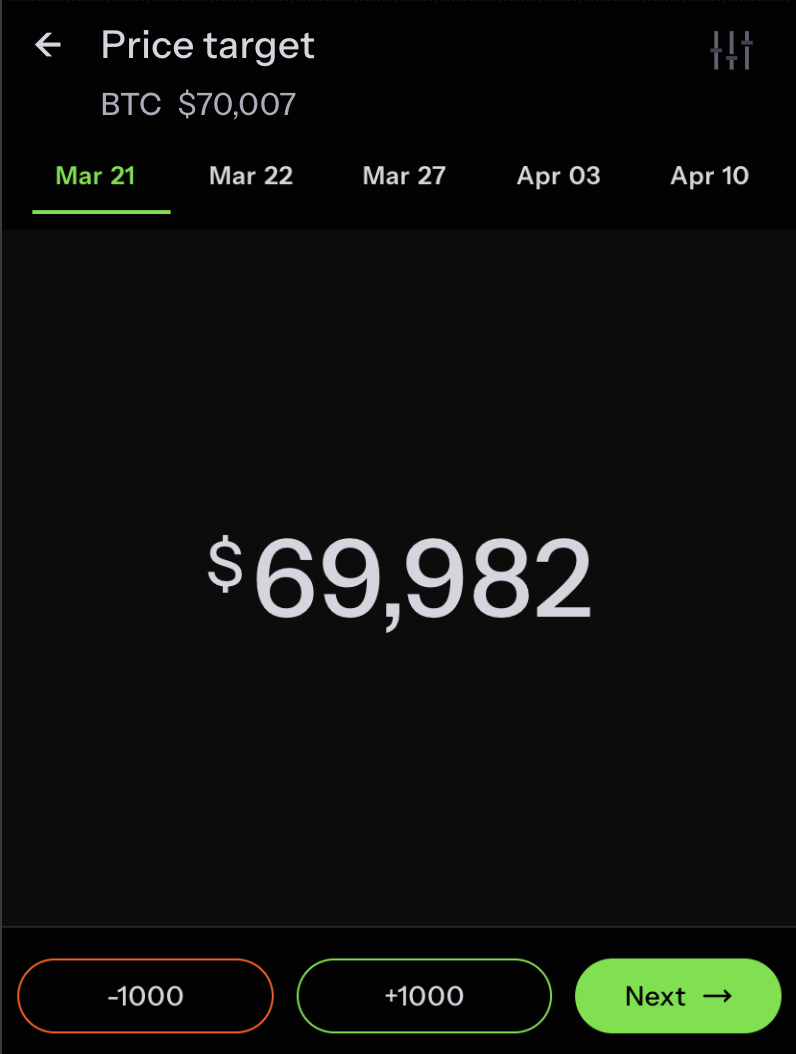
- We fixed the bouncing / stuck animation states on the Price Target flow
Better Outcome Visibility
We also did a real pass on how positions and outcomes are communicated.
We shipped clearer outcome badges, better P&L display, an improved position header chip, and an expired option summary chip so users can understand where a position or payout stands without mentally reconstructing it from raw numbers.
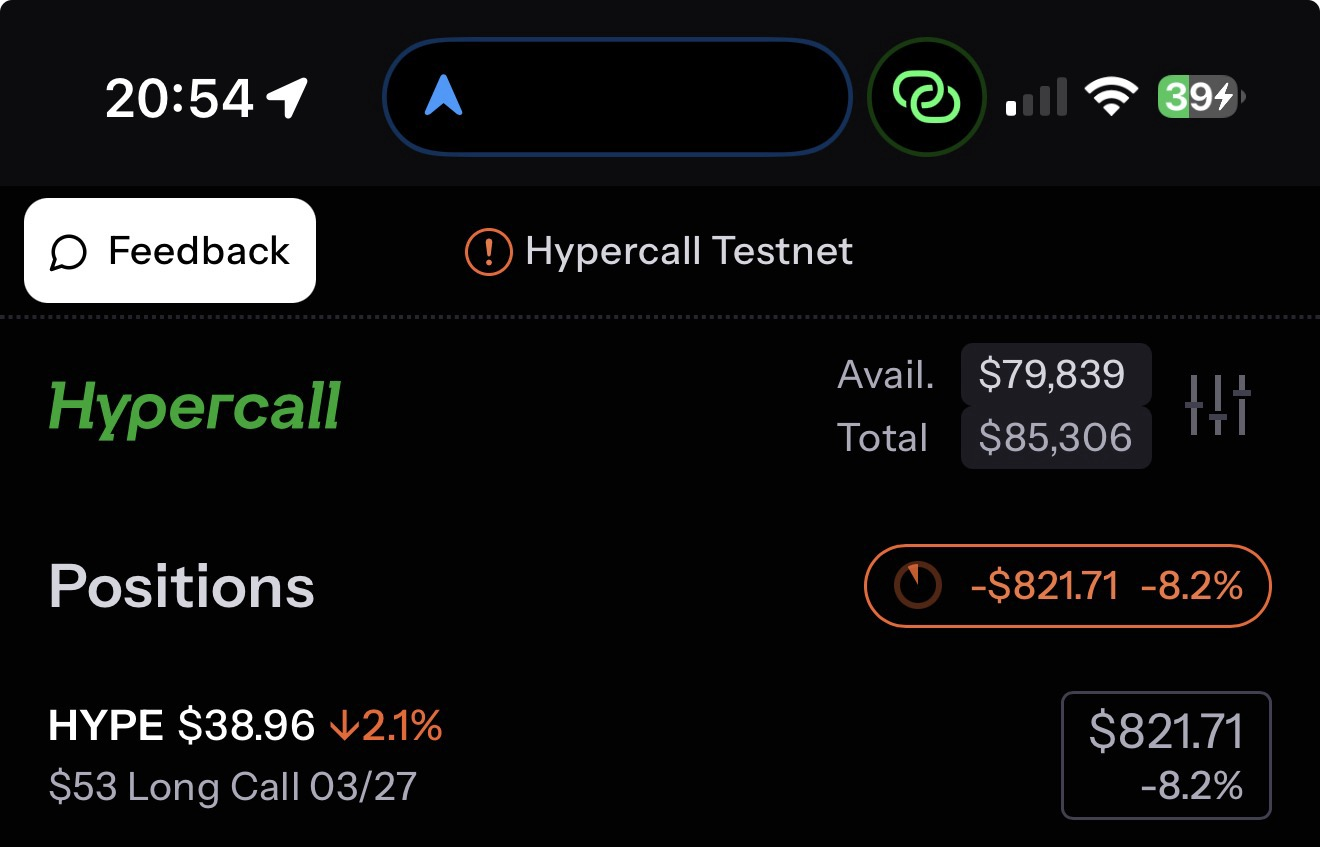
On top of that, we audited the preference system around these displays:
- Added tooltips for preference settings
- Improved badge cycling
- Made sure primary badge preferences actually persist and sync with saved state instead of drifting or silently resetting
This is exactly the kind of thing that matters for derivatives products. If outcomes are not legible, risk is not legible.
Mobile UX and Polish
We shipped a decent amount of mobile polish this week too.
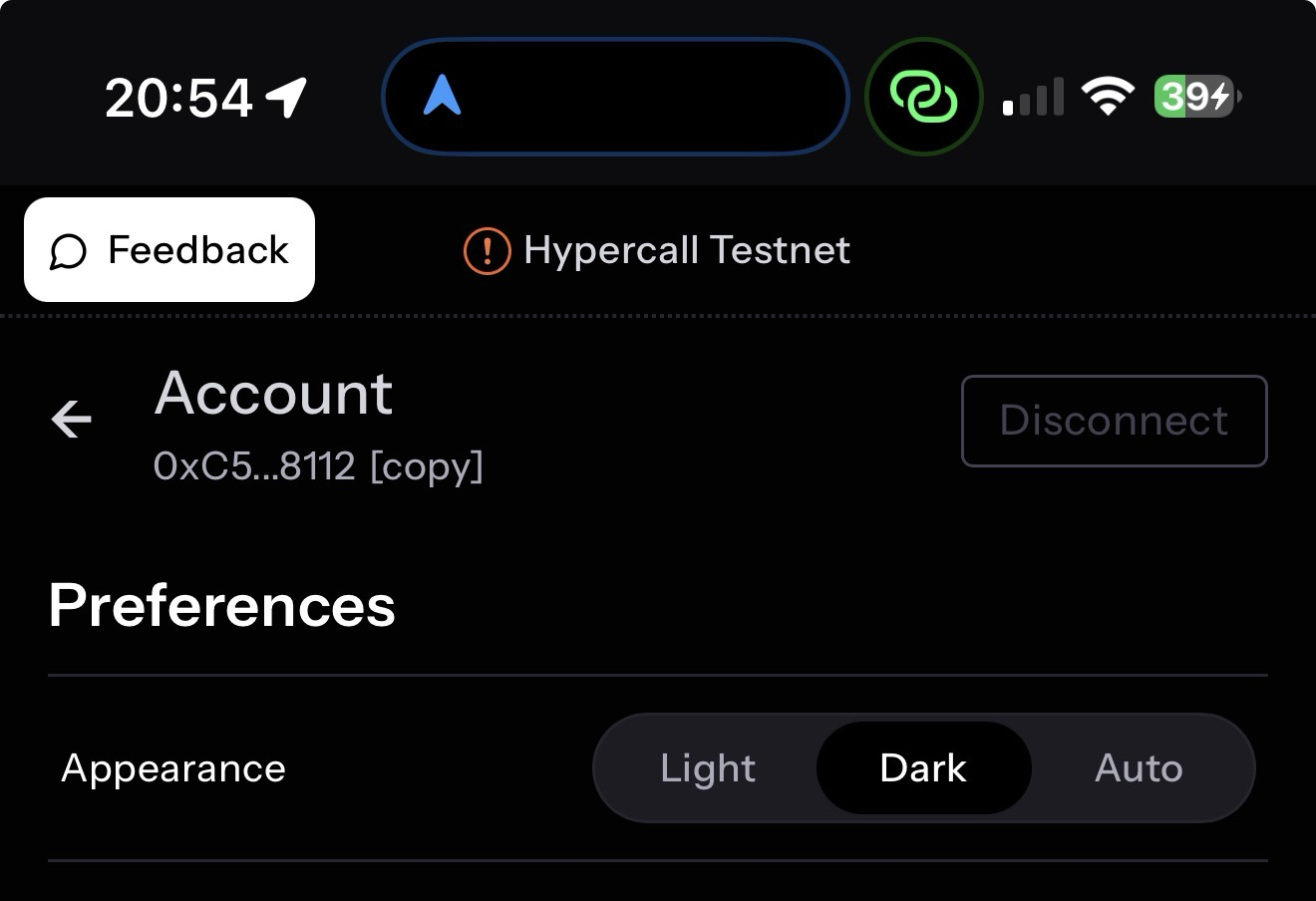
Theming got meaningfully better. We added Midnight mode and an Auto mode that follows the device theme and updates live. New users now default into Auto instead of being forced into a static choice they never made.
The install flow on iOS is also much better. If a user opens Hypercall in a non-Safari browser on iPhone, we now tell them to open the page in Safari instead of showing install instructions that cannot work. For Safari users, the install guidance is clearer.
A few other UX improvements shipped alongside that:
- In-app feedback now supports image uploads, which should make bug reports dramatically easier to reproduce
- Mobile deposit now has a max limit, a Max button, and clearer validation
- Faucet amounts are formatted more cleanly
- Canceling an already completed or canceled order now shows a human-readable message instead of raw backend debug text
Reliability Improvements Users Will Actually Feel
We also fixed a few issues that show up as "the app feels weird" unless you know exactly what is happening.
On WebSocket reconnect, we now re-fetch orders, fills, and portfolio state so users are not left staring at stale data after a restart or reconnect event.
Closing Thoughts
Most of what shipped this week was not about adding more buttons. It was about making Mobile Testnet feel more internally consistent, more readable, and more reliable under normal use.
That is the right work for this stage.
We are still in the phase where correctness, legibility, and product feel matter more than breadth. We will keep expanding the surface area, but the immediate priority is making sure the current system behaves like a serious trading product every time someone opens it.